
How to Lose WeightWithout Losing Yourself
You’ve worked so hard to change your relationship with food. What happens when you still want to change your body?
Maybe you’ve spent years moving away from diets, learning to listen to your hunger, reducing food guilt and trying to build a relationship with food that no longer revolves around control.
You’ve made progress, and perhaps food finally feels a little less complicated than it used to. Yet somewhere in the back of your mind, there’s still a desire to lose weight, build muscle, change your body composition or simply feel differently about how you look.
The difficulty isn’t necessarily wanting those things. It’s knowing whether you can pursue them without returning to the patterns you’ve worked so hard to leave behind.
What if you could approach your body goals with more understanding, flexibility and care, rather than another set of rules to follow?
How to Lose Weight Without Losing Yourself is a seven-module course combining practical nutrition education, somatic therapy concepts and nervous system regulation to help you understand your body goals, assess whether pursuing them is appropriate and navigate the emotional challenges that can come with wanting your body to change.
You’ll learn to recognize when supportive structure is becoming restriction, when disappointment is driving the urge to regain control, and when a physical goal is beginning to ask more of you than you’re willing to give.
This isn’t a prescribed diet or a promise of weight loss. It’s a framework for making decisions about your body without forgetting the relationship you have with yourself.
Take a look inside the course
Get a feel for the teaching and the approach before deciding whether it’s right for you. These are the actual welcome lesson and first module from How to Lose Weight Without Losing Yourself, so you can experience the course rather than simply reading about it.
You already know a lot about weight loss. So why does it still feel so complicated?
You’ve probably heard more nutrition advice than you could ever possibly need. You understand calories, protein, exercise and consistency, and you may have followed more plans than you can remember.
The difficult part often isn’t understanding what a balanced meal looks like or knowing that exercise can support your health. It’s what happens when things don’t go the way you expected.
Perhaps eating more than planned immediately brings up the urge to compensate, or a missed workout makes you feel that you’ve failed. A photograph you don’t like can suddenly become a reason to start restricting again, while disappointing progress can leave you questioning whether you’re doing enough.
Even when you recognize those patterns, responding differently can feel incredibly difficult.
Most weight-loss advice focuses on how to change your body, but very little attention is given to what happens to your relationship with yourself while you’re trying.
That’s where this course takes a different approach.
You’ll explore the practical side of nutrition and movement alongside the emotional experiences, protective patterns and nervous system responses that can make body goals feel so complicated.
Rather than simply knowing what to do, you’ll begin developing a clearer understanding of what happens when things get difficult and how to respond without automatically returning to old behaviours.
Wanting your body to change isn’t the same as needing it to change to feel worthy.
It’s possible to have genuine preferences about your appearance, enjoy strength training or feel interested in changing your body composition without making those goals responsible for your happiness or sense of worth.
The distinction becomes important when a preference begins feeling like a requirement.
Perhaps you want to lose weight because you’d enjoy looking different, but somewhere along the way, that desire becomes tied to feeling attractive, confident or accepted. Suddenly, progress feels urgent, setbacks feel personal, and it becomes difficult to imagine being comfortable with yourself until you’ve reached a particular outcome.
Your physical goal may still be something you want, but the emotional expectations attached to it can make the pursuit far more difficult.
Throughout the course, you’ll learn to explore those expectations, recognize when a goal is becoming emotionally loaded and consider whether pursuing it genuinely supports your wellbeing.
You can care about your body goals without making your body an endless improvement project.
Wanting your body to change is not the same as needing it to change to feel worthy.
A different way to approach weight loss, nutrition and body goals
This course doesn’t begin with a calorie target, meal plan or exercise routine. It begins with understanding what you’re actually working towards and what that goal means to you.
You’ll assess your readiness before deciding whether to pursue body change, identify the parts of your relationship with food that need protecting, and explore how to build routines without turning them into rigid requirements.
You’ll also learn about energy balance, fat loss, muscle growth, strength training and body recomposition, alongside the nervous system and emotional patterns that can influence the way you approach those goals.
As you work through the material, you’ll develop tools for recognizing difficult moments, responding to body-image triggers and evaluating whether the pursuit is still appropriate for you.
The aim isn’t to become better at controlling your body. It’s to become more informed and intentional about the decisions you make for it.
What’s inside the course?
Seven modules to help you understand your goals, build supportive structure and recognize when enough is enough.
Module 1
Desire
What do you actually want?
Explore the goal underneath your goal, including what you hope physical change might give you and how to distinguish a genuine preference from something that has become tied to your confidence, worth or sense of safety.
Module 2
Readiness
Is now the right time?
Assess your relationship with food, hunger, body image, exercise and control using the Green, Amber and Red readiness framework. You’ll explore where you feel relatively steady, where vulnerabilities may need attention and when intentional weight loss might not be appropriate.
Module 3
Safety
What needs to stay protected?
Create personal guardrails around nourishment, movement, rest, emotional wellbeing and the rest of your life. You’ll learn to recognize warning signs and understand when a goal may need to be paused or reconsidered.
Module 4
Structure
Build routines without returning to restriction.
Learn to distinguish supportive structure from rigid rules and explore nutrition, energy balance, fat loss, adequate nourishment, strength training, muscle growth and body recomposition.
The practical mini-lessons help you understand the physiology behind your goals while considering which approaches, if any, are appropriate for you.
Module 5
Regulation
Know what to do when things get difficult.
Explore the nervous system responses and protective patterns that can arise around food, movement and body image. You’ll learn somatic and reflective tools for understanding your triggers, recognizing urges and responding with more choice rather than automatically returning to old behaviours.
Module 6
Monitoring
Recognize when a goal stops supporting you.
Learn to evaluate your progress beyond physical measurements by paying attention to your energy, recovery, relationship with food, emotional wellbeing and participation in everyday life.
Module 7
Enough
Decide what enough means for you.
Explore why body goals can become moving finish lines and how to recognize when further progress isn’t worth what it would require. You’ll consider whether continuing, maintaining, pausing or changing direction is most appropriate and create your personal Body Goals Agreement.
More than information. A framework you can return to.
Knowing why something happens doesn’t always make it easier to respond differently when you’re in the middle of it.
That’s why the course includes a guided, fillable workbook designed to help you apply what you’re learning to your own life rather than simply watching the lessons.
You’ll work through exercises to understand what your body goals mean to you, assess your readiness, establish your personal guardrails and create an approach to nutrition and movement that accounts for your needs and circumstances.
You’ll also explore your body-image triggers, identify the protective responses that tend to appear when things feel difficult and develop a personal regulation toolkit.
At the end of the course, you’ll create your Body Goals Agreement, bringing together the boundaries, insights and intentions you want to carry with you whenever you’re considering a new physical goal.
This isn’t another contract about how much you should eat, weigh or exercise. It’s a way of remembering what matters to you before a body goal becomes another source of pressure.
Why I created this course
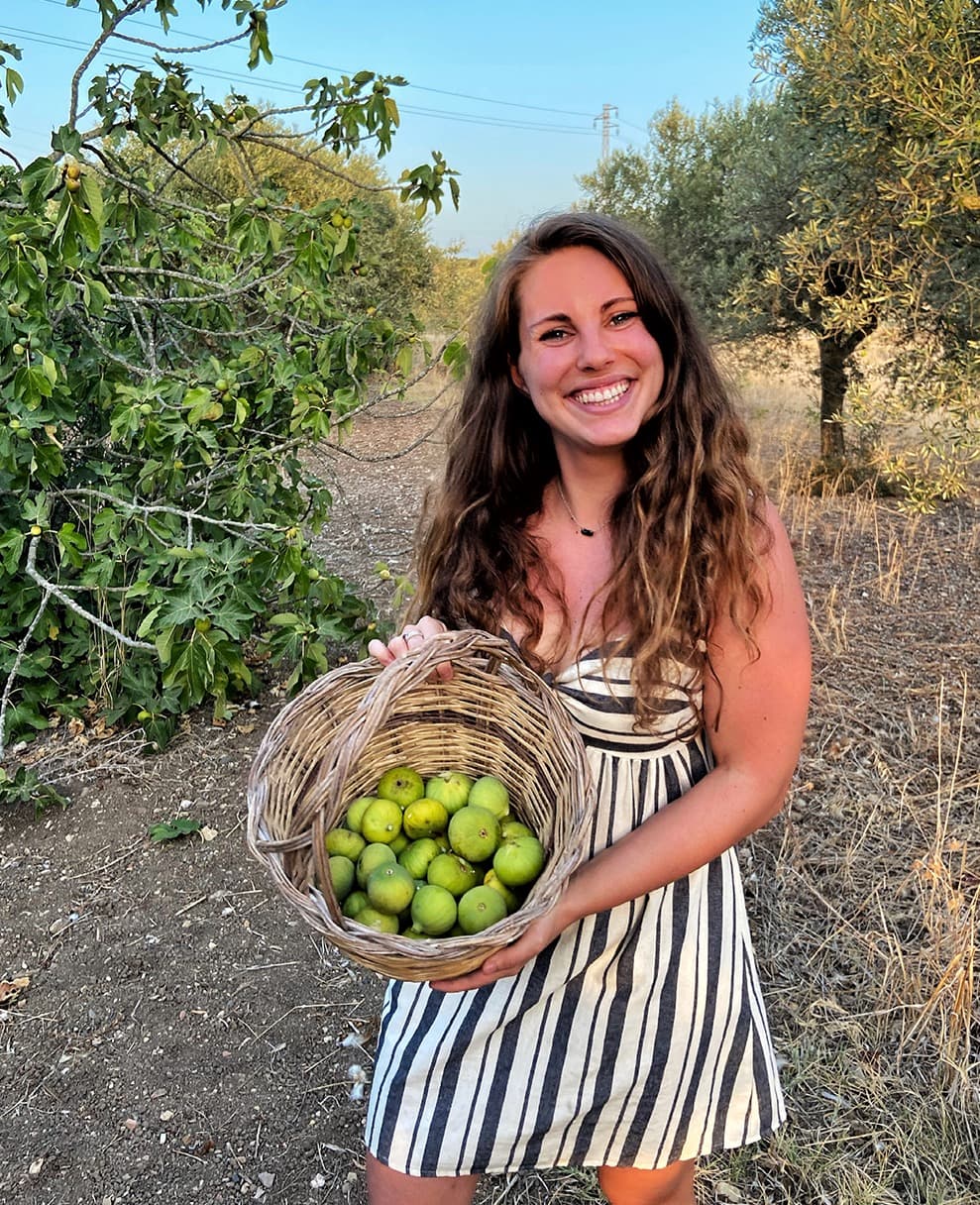
Hi, I’m Tiia, a somatic therapist and nutritionist specialising in complicated relationships with food and body image.
Before training in somatic therapy, I worked in nutrition and traditional weight-loss settings, where I saw how much attention was given to changing people’s eating habits and bodies, and how little was given to what happened emotionally when those changes became difficult.
People often knew what they were supposed to do with food. What they didn’t always have was a way to understand why disappointment, fear, shame or a need for control could make those plans feel so important.
My work gradually shifted towards understanding the nervous system, protective patterns and emotional experiences underneath food and body-image struggles.
That approach became the foundation of Becoming Wilder and my work as a somatic therapist.
How to Lose Weight Without Losing Yourself brings that perspective to the question of body goals, offering a space where wanting physical change can be explored without automatically being encouraged or dismissed.
Your course includes
How to Lose Weight Without Losing Yourself
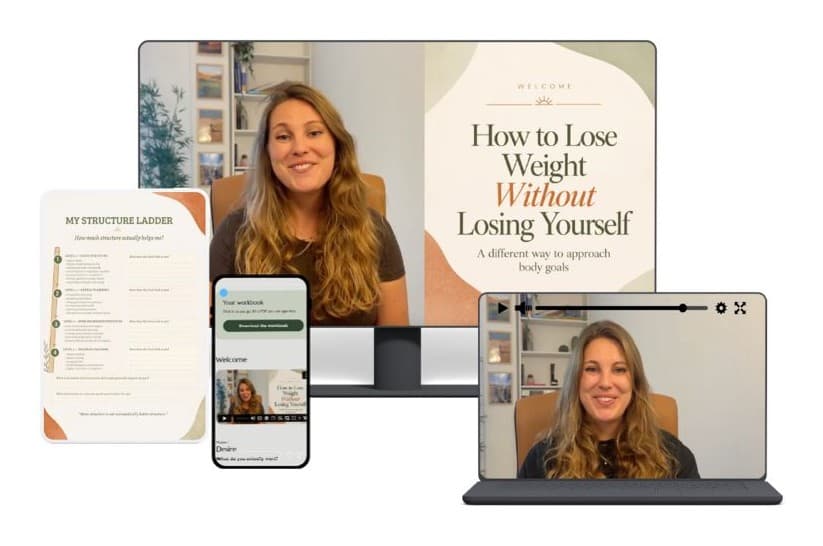
Seven in-depth video modules exploring Desire, Readiness, Safety, Structure, Regulation, Monitoring and Enough, together with two practical mini-lessons covering nutrition and body composition.
You’ll also receive a guided, fillable workbook with personal reflections, planning exercises, regulation tools and your final Body Goals Agreement.
Everything is self-paced, giving you the opportunity to work through the lessons and return to the material as needed.
€99
approx $116 USD
Frequently asked questions
You don’t need to earn your place in your own life.
Your body can change throughout your life, and your interests, preferences and goals may change with it.
You can care about your appearance, enjoy movement and pursue meaningful physical goals without making your worth dependent on achieving them.
You can also decide that a particular goal isn’t right for you, without treating that decision as failure.
There is room for your body to be something you care for, rather than something you spend your entire life trying to improve.
You can want more for your body without believing that you are less as you are.